Antique Brass Sundial Compass: History, Uses and Decorative Appeal
An antique brass sundial compass connects the history of portable timekeeping with a distinctive decorative form. Separate historical instruments from modern antique-style gifts.
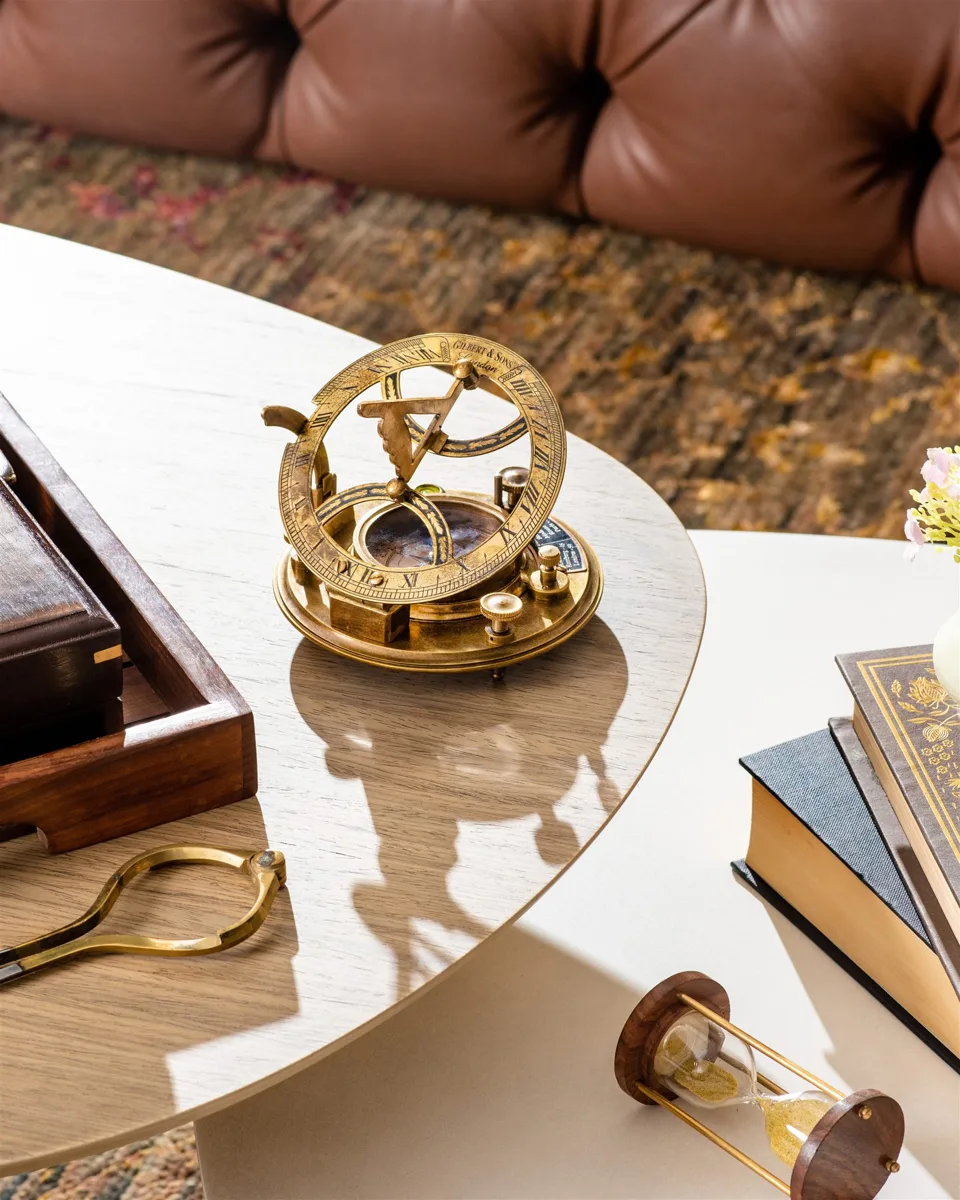
An old instrument or an antique-style object
The phrase antique brass sundial compass can describe two different things in a search result: a historical instrument made long ago, or a new object with a darkened brass finish. The wording alone cannot establish which one you are looking at.
For an older instrument, ask for the maker, estimated date, condition and supporting provenance. Our catalogue contains new vintage-inspired pieces. They borrow traditional forms for gifting and display without claiming a documented life on a ship or in a historical collection.
Portable sundials took more than one form
Historical makers combined sundial components with compasses in different ways. The Science Museum Group records a pocket sundial with a floating dial on a compass, dated about 1830. The New York Historical collection describes another pocket sundial with a folding gnomon, compass window and original box.
These objects show why a single set of instructions cannot cover every antique navigation tool. A maker chose the shape, scales and adjustments for a particular design. A decorative modern object may echo the appearance while differing in construction and calibration.
Science Museum Group: floating-dial sundial · New York Historical: boxed pocket sundial
How a sundial compass works in principle
A sundial uses the shadow of a gnomon against marked hours. The compass can help orient the dial, but magnetic north differs from geographic north. Latitude, level and the particular dial design also affect setup. Follow the instructions for the specific model before moving parts.
The indicated solar time can differ from clock time because of longitude within a time zone, daylight saving time and the equation of time. Those corrections matter only after the instrument is set up correctly; they cannot repair a badly designed or decorative dial.
Why the design works as decor
Circular scales, hinged parts and warm metal create a focal point that rewards a closer look. A small brass sundial can sit beside books about travel or scientific history without requiring an entire room to follow a nautical theme.
Choose the display spot before the model. Check shelf depth, clearance for a lid and the footprint of any stand. For a tripod instrument, measure the legs as well as the dial. Leave room to lift the object without catching nearby picture frames or cables.
Care depends on whether it is old or new
For a potentially valuable historical instrument, ask a qualified conservator before attempting cleaning or repairs. Removing surface material or forcing a hinge can lose information as well as change appearance. Do not use the care of a modern gift as a rule for a museum-age object.
For a new piece, follow the maker’s finish instructions and begin with dry gentle dusting. Do not assume an aged-looking brass finish can be polished without changing it. Keep the object away from damp surfaces and handle adjustable parts carefully.
Choose the gift for its actual role
A vintage sundial compass can be an invitation to learn, a collector’s display object or a reminder to make time for an interest. Decide which role matters and explain it in your own note.
Our pieces are not certified navigation or timekeeping instruments. Compare current listings for dimensions, included items and availability, and choose specialist equipment if accurate measurement is the main purpose.
Explore brass sundial gifts · Choosing a sundial compass gift
Questions about a piece? Contact us and we’ll help you choose.