Vintage Brass Spyglass Gift: A Classic Present for Nautical Enthusiasts
A vintage brass spyglass gift suits a reader, collector or sea lover who enjoys the shape of traditional maritime instruments. Compare its size and intended use before its styling.
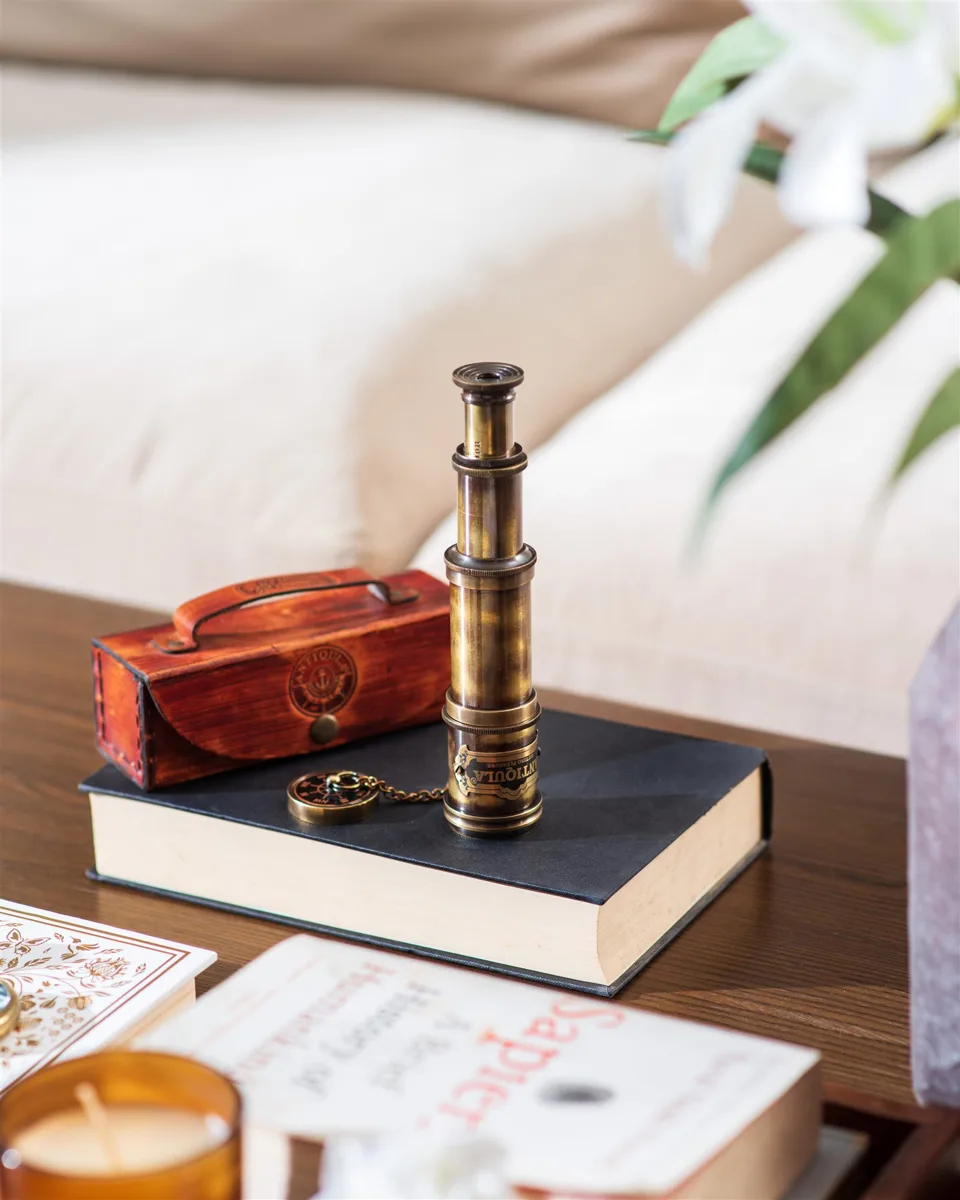
Choose for the person’s interest
A spyglass can recall sea voyages, coastal views or the stories someone has enjoyed since childhood. Start with that connection. A maritime-history reader may value the form and a little historical context; someone hoping to observe distant wildlife may need a specialist optical instrument instead.
Our spyglasses are new, vintage-inspired pieces. Treat the brass telescope gift as a keepsake and compare the exact listing for stated functions. A traditional appearance does not establish historical age, waterproofing or professional optical performance.
Explore brass telescopes and spyglasses · Vintage-inspired versus antique
Historical context without an invented pedigree
Royal Museums Greenwich holds a miniature spyglass made by Jesse Ramsden around 1790. Its record describes a rayskin-covered barrel, a single draw tube and two selectable eyepiece lenses. That collection record is a useful reminder that historical spyglasses were varied objects with specific materials and construction.
Use museum records to explore the tradition, not to authenticate a modern gift. A new nautical spyglass is not an antique just because it collapses or uses brass. If the recipient collects old instruments, ask whether they would prefer a documented period object.
Compare closed length, extended length and storage
A collapsible spyglass has more than one relevant size. The closed length affects storage, while the extended length determines how much room it needs when handled or displayed. If it comes with a box, compare the box dimensions too.
Look for clear photographs of the tubes and any supplied case or stand. Lifestyle props may not be included. A compact piece in a presentation box can work on a narrow shelf; a larger model may need a dedicated place away from the edge.
Do not choose by magnification alone
A magnification number tells only part of an optical story. Clarity, focusing, stability and ease of use also matter, and decorative listings may not provide enough evidence to judge them. Ask for clarification when specifications conflict rather than selecting the largest number.
For a recipient who expects astronomy, detailed birding or regular observation at sea, consult a specialist optical seller. Never look at the Sun through a spyglass or telescope. Do not improvise a solar-viewing setup.
Give it a place in the room
A nautical display usually works better when the object has room around it. Set a spyglass beside a few books or a framed coastal photograph rather than surrounding it with unrelated maritime props. Choose a stable surface where the piece cannot roll or fall.
Use dry gentle dusting for the exterior unless the maker says otherwise, and follow the model’s instructions for lenses and moving tubes. Brass polish intended for household metal should not be assumed safe for optics, coatings or mixed materials.
Make the presentation specific
A note can recall a harbor visit, a favorite maritime novel or a shared interest in exploration. Any book, photograph or card you add is a separate part of your gift, not an accessory to assume comes with the order.
Before ordering, confirm the model’s dimensions, included items and current availability. When the person wants a stand-mounted display rather than a handheld form, compare a tripod telescope before deciding.
Explore brass telescopes and spyglasses · Spyglass versus tripod telescope
Questions about a piece? Contact us and we’ll help you choose.